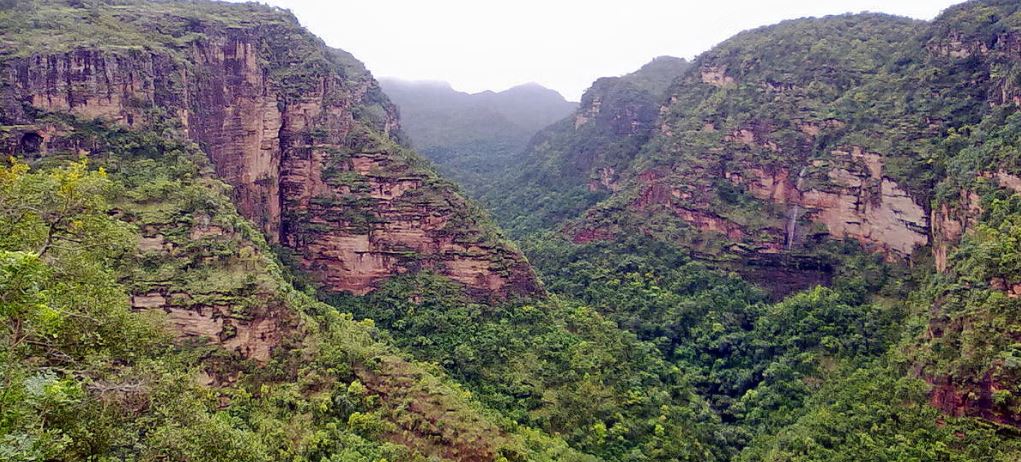
Satpura Jungle—often overshadowed by the flashier names in Madhya Pradesh—remains one of India’s most untouched, soul-stirring wilderness escapes. It’s the kind of forest that doesn’t try to impress you; it simply exists in its ancient, effortless beauty. And if you’re willing to slow down, Satpura rewards you with something rare: raw nature, unfiltered peace, and a connection that feels almost primal.
Whether you’re a seasoned wildlife lover, a quiet observer of nature, or someone seeking a break that truly feels like one—Satpura National Park is a jungle that stays with you long after the trip ends.
What Is Satpura Jungle Famous For?
Satpura National Park, part of the larger Satpura Tiger Reserve, is known for its dense forests, deep ravines, sandstone cliffs, and vast, shimmering backwaters of the Denwa River. More importantly, it’s one of the few wildlife destinations that still feels intimate—where safari jeeps don’t crowd every tiger sighting, and nature sets the pace instead of people.
History of Satpura Jungle: A Wilderness Etched in Time
The Satpura range has always been a cradle of biodiversity and tribal culture. The British were the first to map these forests in detail—but long before them, indigenous tribes worshipped the land and preserved its balance. Satpura’s unique terrain—its plateaus, gorges, and hidden valleys-made it difficult for invaders to exploit, allowing the forest to stay wild and ancient.
What you see today is not a “preserved jungle”-
it’s a survived jungle, standing strong through centuries.
Major Attractions in Satpura Jungle
Wildlife Safaris
Satpura is one of the rare tiger reserves in India where you can actually step off the jeep and experience a walking safari, and honestly, it hits different. As you tread softly over crisp, leaf-strewn trails, every sound becomes sharper—the rustle of branches, the distant call of a bird, the soft crunch beneath your boots. It’s the kind of thrill that sends a steady ripple of goosebumps down your spine. Along the way, the forest reveals its wild residents in the most natural, unhurried way: sloth bears ambling through the underbrush, leopards melting into the shadows, wild dogs darting with electric energy, giant squirrels hopping between branches, and barasingha grazing quietly. Down by the riverbanks, crocodiles laze in the sun like they own the place. And yes, tigers live here too-elusive, regal, and seen only when patience, silence, and a little jungle magic come together.
Denwa River & Backwaters
The river brings a gentle, soothing contrast to Satpura’s otherwise rugged wilderness. It moves quietly, almost thoughtfully, softening the edges of the forest and creating pockets of absolute peace. Visit at dawn, and the whole scene feels like you’ve stepped straight into a living watercolor—thin veils of mist rising from the water, birds gliding low in elegant arcs, their reflections trembling on the surface. The sunlight doesn’t just appear; it unfolds slowly, filtering through the haze in golden streaks that illuminate the riverbank, the rocks, the trees—everything touched by it feels ethereal. For a moment, the jungle isn’t wild or intimidating; it’s tender, poetic, and impossibly serene, offering you a quiet breath before the day’s raw adventure begins.
Pachmarhi Plateau
Often referred to as the “Queen of Satpura,” Pachmarhi is a calm, scenic hill station that sits within the Satpura range and forms an important part of its larger ecosystem. Known for its pleasant climate, Pachmarhi is home to a mix of natural and historical attractions—ancient rock shelters with prehistoric cave paintings, cascading waterfalls like Bee Falls and Apsara Vihar, and viewpoints such as Dhoopgarh, the highest point in Madhya Pradesh. The area is rich in biodiversity, with dense forests, rare plant species, and wildlife commonly seen across the region.
How to Reach Satpura Jungle
Reaching Satpura is fairly easy, thanks to its good connectivity by air, rail, and road. The nearest airport is Bhopal Airport, about 180 km away, from where you can hire a cab or take a bus to Pipariya or the Madhai Gate—both major entry points to Satpura Tiger Reserve. If you’re traveling by train, Pipariya Railway Station is the closest major railhead, located around 50–60 km from the reserve and well-linked to cities like Delhi, Mumbai, Jabalpur, and Bhopal; taxis are easily available from here to take you straight into the forest region. Road travelers will find the journey just as pleasant, with smooth highways connecting Satpura to Bhopal (180 km), Jabalpur (250 km), and Nagpur (300 km). The drive is surprisingly scenic, passing through rolling hills, clusters of quiet villages, and long stretches of refreshing greenery that set the mood for the wilderness ahead.
Conclusion
Satpura isn’t for those in a hurry; it’s for travelers who want to truly feel nature, not just see it. This jungle isn’t scripted, filtered, or loud—it’s raw, untamed, and profoundly beautiful, a place that reminds you that stillness is a luxury and nature is the finest form of therapy. Whether you’re walking beneath ancient trees, drifting along the Denwa River at sunrise, or quietly waiting by a trail for a sloth bear to appear, Satpura offers moments that linger deep in the heart. For anyone seeking a wildlife escape that feels untouched, soulful, and refreshingly human, Satpura Jungle is where the journey should begin.
