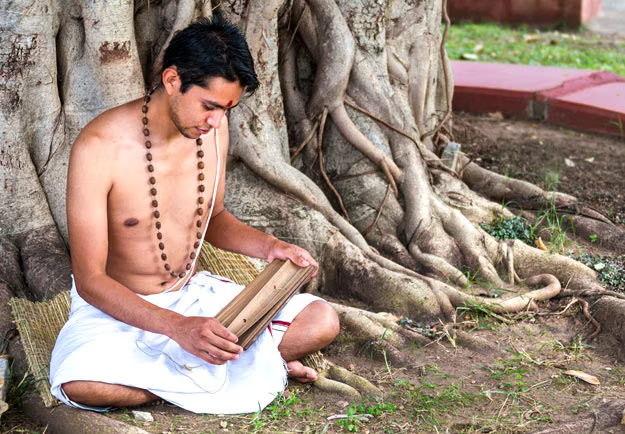
I had always imagined Sanskrit as something carved on temple walls or tucked away in old palm-leaf manuscripts. But the day I reached Mattur, a tiny village near Shivamogga, the language stepped off the pages and walked right into real life. And let me tell you — seeing people greet each other with “Namah te” while kids casually chatter in Sanskrit feels like stumbling into a parallel universe where tradition is still alive and breathing.
My trip to Mattur wasn’t planned; it was pulled by curiosity. What I found was a village that glows with heritage, discipline, and an old-world charm that’s surprisingly warm rather than rigid.
Arriving in a Village That Speaks in the Voice of the Ancients
My first impression of Mattur was simple: peace draped in green. Coconut trees stood like quiet guardians, areca nut farms stretched towards the horizon, and the gentle hum of the Tunga River completed the village’s rhythm.
And then, the sound hit me — Sanskrit. Not in classrooms, not in temples, but in everyday life. Children running across the lane. Women discussing chores. Elders chatting in the courtyard. It felt surreal, like history casually strolling in the afternoon sun.
Mattur isn’t trying to preserve Sanskrit; it is living it. And being there felt like being invited into a timeless cultural treasure.
A Walk Through Mattur’s Heart — Tradition Wrapped in Simplicity
As I wandered through the lanes, the village started opening up like a well-written chapter. Red-tiled houses, carved wooden doors, and warm faces who were more than happy to welcome a curious traveler.
The Sanskrit Pathashala — The Soul of the Village
I visited the famous Pathashala where students, young and old, sit cross-legged and chant the Vedas with a focus and clarity that floored me. The energy in that room was something you don’t just see — you feel it rise through you.
The Artistic Side of Mattur
The village is also home to beautiful traditional art forms — from intricate rangoli patterns to classical music practices that echo softly through the evenings. Creativity blooms here like jasmine in summer.
The Tunga River — My Quiet Corner
My favorite moment? Sitting on the banks of the Tunga River as the sun dipped behind the forests. The breeze was soft, carrying the scent of wet earth and distant prayers. The water shimmered like molten gold, and the silence was so healing it felt almost sacred.
What Makes Mattur Truly Special
It’s not the fact that Sanskrit exists here — it’s the way the villagers embrace it without turning modern life into a museum exhibit. They use smartphones. They farm. They work in cities. But they return home to a language that binds them together.
Their philosophy is simple:
“Root yourself in heritage, grow fearlessly into the future.”
And honestly, I felt that spirit everywhere — in their hospitality, their conversations, their constant effort to keep culture alive.
Best Time to Visit Mattur — From My Own Experience
I went in early winter, which made the experience even more magical. But overall:
- October to February is perfect — crisp air, pleasant days, ideal for village walks.
- Monsoon (June–September) wraps Mattur in lush green, but some paths get slushy.
- Summer (March–May) is warmer but still manageable, especially near the river.
Whenever you go, Mattur feels calm — like a soft retreat from the noise of the world.
How I Reached Mattur — A Smooth Ride Through the Ghats
I began my journey from Shivamogga, which is the nearest major town. The drive to Mattur is short and scenic, taking me through winding roads and thick greenery. If you’re coming from Bengaluru, you can take a train or bus to Shivamogga and then hire a cab or auto to the village.
The roads are smooth, the views are soothing, and the closer you get, the more you feel the unhurried rhythm of village life.
Meeting the People — Warmth That Stays With You
One thing Mattur taught me is that culture survives when people cherish it with love, not rigidity. Everyone I met — from elders reciting shlokas to kids joking around in Sanskrit — was proud of their identity but incredibly open-hearted.
They offered me food, stories, and smiles that felt like sunshine. And even though I didn’t always understand their Sanskrit conversations, I understood the warmth.
Conclusion: Mattur Is Not Just a Village — It’s a Feeling
Leaving Mattur felt like stepping out of a gentle dream. There’s something incredibly grounding about being in a place that values its roots so deeply. Mattur doesn’t overwhelm you with monuments or big attractions — it touches you quietly, like a prayer whispered under your breath.
If you ever need a journey that slows you down, makes you reflect, and reminds you that tradition can be beautiful, not burdensome — Mattur is waiting. And believe me, you’ll return with a piece of its serenity lodged softly in your heart.
