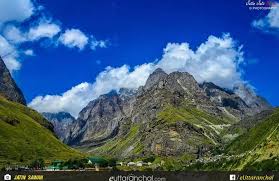
High in the folds of the Garhwal Himalayas, where the air thins and the silence deepens, lies Mana Village — proudly known as India’s Last Village. But truth be told, Mana feels less like the “last” anything and more like the beginning of something timeless. A doorway into myth. A sanctuary wrapped in stone, prayer flags, icy winds, and ancient whispers.
Visiting Mana isn’t just a trip.
It’s a quiet transformation.
Why Mana Village Should Be on Your Travel Bucket List
If you crave destinations that are raw, poetic, spiritually charged, and wrapped in unbelievable natural beauty, Mana Village in Uttarakhand is the kind of place that will carve itself into your memory. Every lane feels like a story; every cliff feels like a secret the mountains have guarded for centuries.
This is where mythology meets geography.
Where legends walk alongside locals.
Where nature still speaks in its original voice.
Mana Village & Its Mythological Significance
Mana isn’t merely a village; it’s a living timeline where mythology and geography merge seamlessly.
1. The Mahabharata’s Final Chapter Was Born Here
This is where Veda Vyasa narrated the Mahabharata — the world’s longest epic — to Lord Ganesha, who wrote it patiently on stone.The caves still stand at the heart of Mana, filled with the quiet energy of legends that shaped Indian philosophy.
2. Birthplace of the Saraswati River
Unlike gentle mountain streams, the Saraswati River bursts forth from beneath a massive rock with fierce, roaring strength.It’s a sight that feels more heavenly than earthly.
3. Bhim Pul: The Bridge of Strength
According to legend, when Draupadi struggled to cross the Saraswati’s turbulent flow, Bhim placed an enormous stone slab across the river, forming a natural bridge.Standing on it, with water thundering beneath your feet, feels like stepping into mythology itself.
4. The Pathway to Heaven
Mana marks the starting point of the Swargarohini Yatra, the trail believed to be taken by the Pandavas on their final ascent toward heaven. Even now, the mountains here feel sacred, older than belief itself.
Top Places to Visit in Mana Village
Vyas Gufa– A cave perched atop a rocky platform, believed to be the meditation site of Sage Vyasa. The carvings, the incense-soaked air, and the unbelievable calm will make you stop and breathe deeper.
Ganesh Gufa– Just a short walk away, this cave is dedicated to Lord Ganesha, who supposedly wrote the Mahabharata here.
Saraswati River– The river appears suddenly, crashing down through rocks as though breaking free with pure divine energy.
Bhim Pul– A giant stone slab that naturally arches over the raging Saraswati, forming an unforgettable natural bridge
Best Time to Visit Mana Village
Mana Village remains accessible only from May to November, as the rest of the year the region is buried under heavy Himalayan snowfall. The summer months of May and June bring a pleasant, refreshing climate, blooming wildflowers, and full access to every viewpoint — a perfect window for trekkers, photographers, and anyone who loves clear mountain trails. The monsoon season from July to August, however, is best avoided; the region becomes prone to landslides, unpredictable weather, and frequent roadblocks, especially around Badrinath. Once the rains fade, September and October unveil Mana at its finest — crystal-clear skies, majestic snow-draped peaks, and a calm, spiritual atmosphere that draws in seekers and nature lovers alike. By November, winter starts whispering through the village with crisp, icy air and early snowfall dusting the surrounding peaks. It’s the final chance to visit before the village shuts down for the season — ideal for travelers who adore cold, quiet Himalayan mornings.
How to Reach Mana Village
The easiest way to reach Mana Village is by first flying into Jolly Grant Airport in Dehradun, which sits about 315 km away. From the airport, you can hire a taxi or hop onto a bus and follow the scenic route through Rishikesh, Joshimath, and Badrinath before finally reaching Mana — a breathtaking 10–12 hour mountain drive. If you prefer traveling by train, the nearest major railway station is Rishikesh, roughly 290 km from the village, where early-morning buses and shared taxis regularly head toward Badrinath. For road-trip lovers, the drive itself becomes part of the adventure. The classic route — Rishikesh – Devprayag – Srinagar – Rudraprayag -Karnaprayag -Joshimath – Badrinath – Mana — offers winding, well-maintained Himalayan roads wrapped in dramatic cliffs and river views, making it an unforgettable journey for anyone who loves the mountains.
Conclusion
Mana Village is the kind of place that lingers in your heart long after you leave. It’s quiet, ancient, humbling — a world where mountains speak, rivers roar with divine force, and legends breathe through caves and stones.
Here, the Himalayas don’t just stand tall —
they stand wise.
Mana reminds you that travel is not always about movement.
Sometimes it’s about stillness.
Sometimes it’s about listening.
Sometimes it’s about rediscovering wonder in the simplest things — a cup of tea, a rushing river, a cave filled with incense.
If you’re searching for a journey that feels spiritual, scenic, raw, and deeply human,
Mana Village is your calling.
