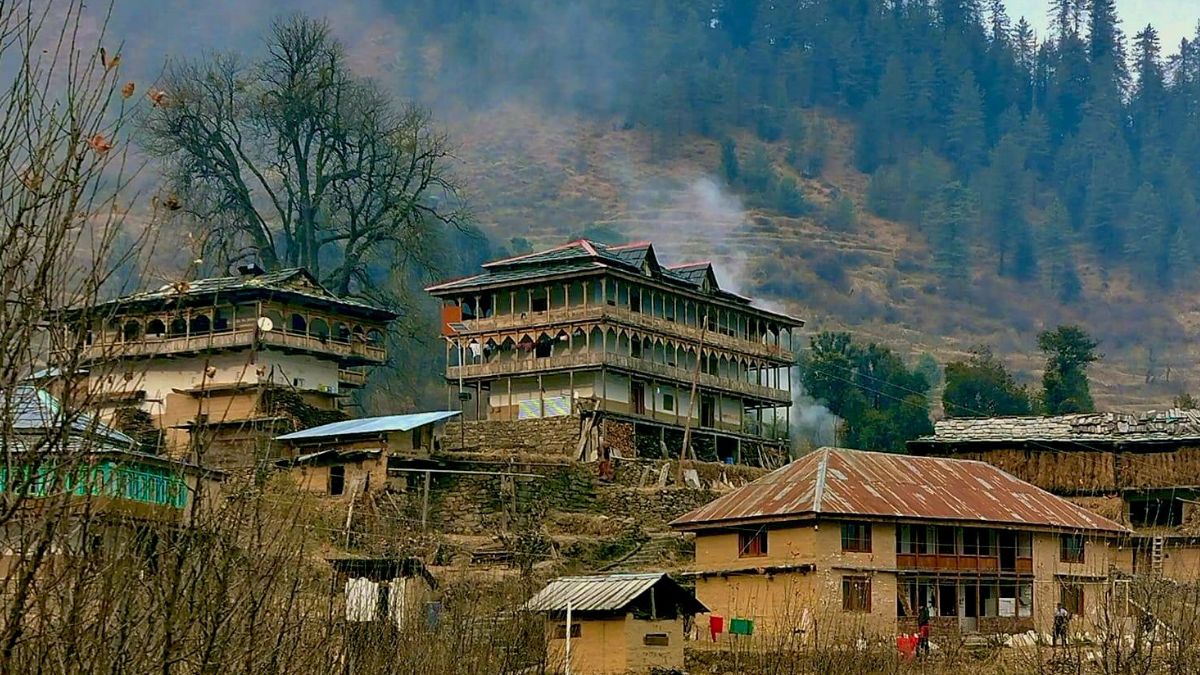
Long before I ever set foot in Malana, I’d heard the whispers — tales of an ancient democracy, a mysterious tribe, a secluded village wrapped in rules stricter than any border. But nothing prepared me for the moment I actually arrived. Malana isn’t just a destination you tick off your list; it’s an experience that rises slowly, like mountain mist, and settles somewhere deep inside you.
My journey began with a trek that pushed my lungs and thrilled my spirit. The steep trail, the wild pine scent, the cold air brushing past my skin — everything felt like a gentle test before the mountains allowed me a glimpse of Malana. And when the village finally revealed itself, perched on a quiet slope of the Parvati Valley, it felt like I was stepping into a world carefully hidden from time.
Entering a Village Lost in Time
Walking into Malana is walking into a secret. The wooden homes stacked neatly on the slopes, the silence between the houses, the ancient stone carvings that seem to stare right through you — the village carries its age with a quiet pride. And even as an outsider, you sense their history immediately. Malana claims descent from Alexander the Great’s soldiers, and whether the story is myth or truth, the people here hold onto their identity with an unshakable strength.
I followed all the village protocols — no touching houses, no leaning on walls, no wandering off the designated paths. And strangely, instead of feeling restricted, I felt humbled. Malana isn’t distant; it is protected. And being allowed to walk through its lanes felt like being invited into a living museum.
The Trek and the Valley That Stole My Heart
Before reaching the village, the trek itself had already cast a spell. Waterfalls crashed loudly somewhere beyond the trees, carrying the smell of fresh spray. Tiny wooden bridges swayed as I crossed over rushing streams. And every time I paused to catch my breath, I looked up at peaks standing like silent storytellers.
The landscape around Malana is rugged, raw, and heartbreakingly beautiful. I saw shepherds leading their flocks up the slopes, their silhouettes merging with the mountains. I saw children running barefoot across the fields with laughter that echoed like music. And when I finally reached the village viewpoint, the Parvati Valley stretched below me like a green silk carpet unfurled by the gods.
Discovering Malana’s Spirit and Stories
The Ancient Temple of Jamlu Devta
The heart of Malana beats inside this temple — a wooden structure brimming with history and energy. You cannot enter it, of course, but just standing outside was enough to feel something powerful, something older than words. The villagers believe Jamlu Devta sees all, decides all, and guides all — and you sense their faith woven into daily life.
The Unique Culture
What struck me most was how deeply the villagers believed in preserving their way of life. They speak Kanashi, a language spoken nowhere else in the world. Their democracy is older than many nations. Their rules are strict but rooted in identity. And while travelers often come here chasing legends about “Malana Cream,” the truth is, the culture itself is far richer than any secret strain.
A Silence That Teaches You Things
At night, the entire valley slows down to a hush. I sat outside my homestay, wrapped in warm blankets, watching clouds drift across a silver moon. It was the kind of silence that clears your mind and lets your heart speak. In that moment, everything felt simple. Real. Honest.
Best Time to Visit Malana — From My Experience
I went during the late summer, when the skies were mostly clear and the trails were gentle. But each season brings its own magic. March to June is travel-friendly, full of greenery and comfortable weather. September to October offers crisp air, perfect blue skies, and breathtaking mountain clarity. Winters turn Malana into a frozen wonder, but the trek becomes challenging and the village often isolates itself — beautiful, but only if you’re prepared.
How I Reached Malana — A Journey Through Pure Mountain Drama
I started my trip from Kasol, a vibrant backpacker town not too far from the village. The drive up to the Malana gate was scenic enough to make me forget the bumps on the road. From the drop point, the trek begins — steep, rocky, thrilling. It took me a couple of hours, with plenty of breaks to admire the valley. If you’re coming from Bhuntar Airport or Kullu, the journey flows the same way: airport → Kasol → Malana gate → trek.
Road trips are the soul of Himachal travel, and the route to Malana is no exception — winding roads, roaring rivers, pine forests, and tiny dhabas serving hot parathas that taste better than any luxury meal.
Staying in Malana — Away From the Noise of the World
I stayed in a humble homestay on the outskirts of the village — respectful of the rules and close enough to embrace the peace. No fancy amenities, but everything that matters: warm food, warm hearts, and views that make you forget cities exist. Electricity flickers sometimes, but honestly, the stars are brighter company anyway.
Things I Learned While Traveling to Malana
Always carry light layers; the weather is moody. Respect local customs — this is their home, not a tourist park. Don’t photograph villagers without permission; they value privacy. And carry cash, because ATMs don’t climb the mountains with you. Above all, keep an open mind. Malana isn’t a “party destination.” It’s a cultural treasure, a fragile heritage, a place that deserves gentle footsteps.
Conclusion: Malana Left Me Quiet, In the Best Way Possible
When I trekked back from Malana, I felt slower. Softer. More centered. There are very few places that change the rhythm of your thoughts, and Malana is one of them. It doesn’t try to impress you, it doesn’t perform — it simply exists, untouched, unwavering. And if you go with respect and curiosity, it opens itself like a story written in the language of mountains.
Malana taught me that some places are not meant to be captured — only felt. And even now, when life gets loud, I find myself remembering that silent valley, those ancient wooden homes, and the strange, beautiful sense of belonging I felt in a village that wasn’t mine.
